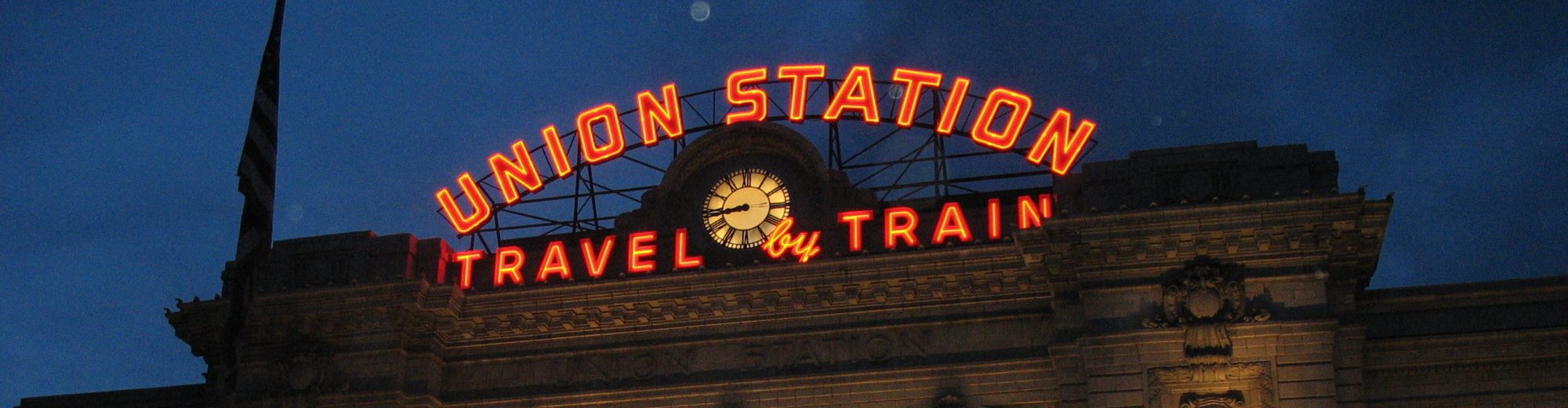
May 15, 2013, 9:22 pm
Today, Second Ave Sagas linked to a digitized copy of Massimo Vignelli’s 1970 graphics standards manual for the New York City Subway. The photographed pages of the manual describe, in exacting detail, the graphic look and feel and philosophy of wayfinding signage for the Subway. While Vignelli’s schematic map (a scan of the map can be found here; discussion of the map’s legacy here and here; and for more from Vignelli himself, see this outtake from Helvetica) didn’t make it out of the 70s, his graphic legacy lives on through the system’s signage.

Henry Grabar wrote about the digital version of the manual in Atlantic Cities in March, adding some history to the conversation. One such change was the inversion of the standards from black text on a white background to the system’s current white text on a black background as a measure to discourage graffiti, though there are claims that white on black is more legible. On a temporary basis, some black-on-white signs have returned.
One of the more interesting pages from the manual shows how signs showing options should only appear at decision points along the way to a train – not before, and not after:

The text at the top of the page reads (out of the frame of the screen capture above, view the full page with magnification to read the text):
This diagram explains the sequence of information to the subway rider. It is a branching system that will lead him to his destination as directly as possible. The basic concept of this branching system is that the subway rider should be given only information at the point of decision. Never before. Never after.

All of the discussion about the manual emphasizes the power of standards. For a detailed history of New York’s struggle with diverse signage, see Paul Shaw’s online work, based on his book. The history of New York’s signage is understandably turbulent, but the level of coherency that comes through for users given the scale of the system is remarkable.
This puts Metro’s recent discussions about moving away from ‘Metro Brown’ into context. If any of New York’s standards look familiar, it is because Vignelli worked on both systems. Vignelli was a consultant to Harry Weese (architect), along with Lance Wyman (map designer), and reportedly was the one to coin the name ‘Metro’ and create the ‘M’ logo. Given the efforts in New York to standardize wayfinding signage, why move in the opposite direction now?
May 12, 2013, 9:52 pm
Last week, the Washington Post featured a lengthy profile of WMATA’s head architect, the man behind the concepts in Metro’s recently unveiled ‘station of the future‘ concept. The article offers some insight into the thinking behind the proposed re-design of the Bethesda station, as well as some of the pushback Metro has received already from the Commission on Fine Arts (among others).
Some changes seem sensible, like higher-output light fixtures to replace current fixtures, with the goal of increased light levels while staying true to Harry Weese’s indirect lighting scheme. These seem more like mechanical or operational challenges for the most part, the kind of behind-the-scenes stuff that won’t make such a huge difference in the appearance of stations.
Other proposals seem like change for the sake of change: replacing bronze with stainless steel, for example:
Karadimov acknowledges bronze as a central element of the “original palate” of Metro. But operationally, it is not ideal. Bronze needs polishing, not just cleaning, and the grime on the railing in Bethesda easily comes off to the touch. In the NoMa-Gallaudet and Largo stations, some of the system’s newest, there are already stainless steel railings that Karadimov says are less expensive to clean (though he did not have a cost estimate) and lighter in color. Same for the first group of five Silver Line stations under construction and the canopies that cover some Metro entrances.
Karadimov proposed replacing the bronze railings and escalator panels throughout the Bethesda station with stainless steel; after criticism over the idea of stripping out so much bronze, however, he retreated, agreeing not to replace the bronze with stainless steel or any concrete parapets with glass. Instead he says Metro will keep all its bronze railings. But he says the escalator panels are a less central element that needs replacing. “That is one thing that we are going to have to have a further conversation about,” he said.
While stainless steel might require less maintenance, that doesn’t make it maintenance-free. Plenty of Metro’s entrance canopies are already showing their age, along with accumulated dirt and grime. Likewise, I can’t see any objection to the use of stainless steel features in new stations, but fail to see why this is such a critical element for the improvement of existing stations. If an escalator replacement opens the door for a stainless steel enclosure instead of a bronze one, so be it – this would hardly be Metro’s first stainless escalator. However, that reasoning doesn’t apply to bronze railings that are not in need of replacement.
 Stainless steel station elements at NoMa-Gallaudet U Station. Photo by author.
Aside from bronze, the other element of Metro’s aesthetic under attack is the color brown:
But if the stations are to get brighter, Karadimov said, brown cannot continue to be the dominant color. “We’re not going to keep any brown,” he said. “We believe that having a lighter color will help make the station more bright.”
Like the bronze, brown unquestionably contributes to the placid feeling of the stations, but Karadimov said it contributes just as strongly to views that the stations appear dated. Whether the agency will have to retreat on the color brown as it did on bronze has not been decided.
Karadimov also has not formally proposed a color to replace it. He talks about light gray and silver, which he said would make signage easier to read, but without stainless steel to pair it with he may have to reconsider.
As ubiquitous as brown is within the Metro system, it is by no means the dominant color inside stations. The complaint that bronze is too dark seems to ring hollow, as well. Concrete and the red tiles are far more dominant in the palate than either brown or bronze.
Brown elements are limited to accent pieces and signage. The shade of brown itself is so dark that it doesn’t readily register as a brown at all, but almost a black-brown. Contrary to the assertion from Metro, this dark background provides a great deal of contrast for white lettering, making signage easy to read. White text on dark backgrounds is hardly unique to DC in terms of mass transit signage, either.
 Combination of stainless steel, painted steel, and brown signage elements at NoMa-Gallaudet U Station. Photo by author.
Even in Metro’s newer stations (those not a part of the originally planned system), Metro’s white-text-on-brown-background signage standard remained intact. Why change it now and disrupt the uniformity across the system?
The addition of gray elements to Metro’s signage scheme is not new, either. Gallery Place, WMATA’s designated ‘test’ station for new signage, has seen lots of designs over the years, including different background colors and fonts and backlit signage, and the use of gray backgrounds for directional arrows – but none abandon Metro Brown.
May 9, 2013, 10:18 pm
 San Francisco skyline w/ crane. CC image from Omar Omar
Tales from two cities:
San Francisco: From Ilan Greenberg in The New Republic – San Francisco’s Gentrification Problem isn’t Gentrification. Greenberg compares the public debate (often writen, and discussed previously here) in San Francisco compared to more the more familiar narrative in other cities.
Here, the debate is dominated by fierce new champions of the anti-gentrification cause who aren’t concerned so much about the truly poor being forced from—or tempted out of—their neighborhoods. In their view, the victims of gentrification are also affluent, just less so than the people moving in. And the consequences are supposedly catastrophic not only to these relatively well-off people who are living amidst people even more well-off, but a mortal threat to nothing less than the rebel soul of San Francisco.
While the conversation may not fall into the same narrative as other cities, that doesn’t make it more useful. Greenberg notes that the San Francisco conversation can “suck the air out of a reality-based conversation” about affordability.
Greenberg spoke with Peter Cohen, a San Francisco housing advocate:
Sitting in the worn lobby of a hotel patrolled by security guards near Twitter’s new corporate headquarters, and armed with documents showing statistics on skyrocketing rents and rising tenant evictions, Cohen came to talk about disenfranchised people struggling to keep financially afloat and about the legal intricacies of deed-restricted affordable housing. He said he expects to have an uphill climb to reach new residents obsessed with buzzy restaurants and city officials in thrall to new tech business interests, but now also struggles to be heard over the din of middle-class residents moaning about the “gentrification” of their neighborhoods—residents who themselves may have been gentrifiers, or more likely followed in gentrifiers’ footsteps.
Greenberg writes of this narrative as if it were inevitable: “The compact city has a long history of clubby NIMBYism and knee-jerk preservationist politics that torpedoes even the most sensible development projects.” In addition to the outright opposition, fees and a long approvals process increases barriers to new housing supply in the city.
Some opposition to new development is that it makes the city dull. This isn’t the first time such arugments have come up. Inga Saffron, also writing in The New Republic made the same case that gentrifcation brings monotony. Writing specifically of San Francisco, Charles Hubert decries the “homogenization” of the city.
Part of the challenge is that rebuffing that monotony probably requires more development to meet the demand, not less. It’s a somewhat counter-intuitive proposition. Another challenge is the notion that cities do not (or should not) change, when history says otherwise.
Brooklyn: San Francisco’s experience is not to say that fears of monotonous development aren’t somewhat warranted. Unleashing the market alone won’t solve all urban ills. The Wall Street Journal looks at the results of one of New York City’s rezonings, ten years later, with some detrimental effects on 4th Avenue in Brooklyn:
But the Planning Department lacked such foresight in 2003 when it rezoned the noisy avenue to take advantage of the demand for apartments spilling over Park Slope to the east and Boerum Hill and Gowanus to the west. Focused primarily on residential development, it didn’t require developers to incorporate ground-level commercial businesses into their plans, and allowed them to cut sidewalks along Fourth Avenue for entrances to ground-level garages.
Developers got the message. With the re-zoning coinciding with the real-estate boom, they put up more than a dozen apartment towers, many of them cheap looking and with no retail at the street level, effectively killing off the avenue’s vibrancy for blocks at a time.
The city finally got wise and passed another zoning change last year, correcting some of these mistakes.
The shortcomings on 4th Avenue show the tension between market urbanism and proscriptive/prescriptive urbanism (and both words probably apply) but it also shows the power of incentives and how development tends to follow the path of least resistance. But it’s not like this outcome is solely a product of the market.
Some of the architects responsible for middle-brow architecture along Fourth Avenue are surprisingly candid about the other cause: They pass the buck to the developers who hired them and the pressure they faced to cut costs at the expense of aesthetics.
“I try to do my best for my clients and try to get them as big a building as possible,” says Henry Radusky, a partner with Bricolage Architecture and Designs LLC, which has built nine buildings along Fourth Avenue in the last decade.
One of Mr. Radusky’s buildings was 586 President St., one of three buildings on the same two-block stretch of the avenue that contribute to its canyon of mediocrity look. Another is the Novo Park Slope, at Fourth Avenue and 5th Street, a pallid, prison-like structure with parking and a medical facility at ground level that towers menacingly over its next-door neighbors.
That parking, of course, is the product of prescriptive regulation. Market pressures might impact some design choices, but the relative impact of those decisions (compared against higher quality materials or prioritizing retail uses on the ground floor) likely pales in comparison to the cost and spatial needs of parking.
Back in San Francisco, Peter Cohen is looking for ways to mesh the market and prescriptive elements together:
Even housing advocates like Cohen concede a hard ideological approach loses hearts and minds. “I also understand that we have a changed disposition toward cities. How can you find a sweet spot between these two forces—how do you bring in this creative class, but also make sure that people who toiled in the weeds are not simply squeezed out? How can you sort it without just saying that the market will take care of everyone, when obviously it won’t?”
May 5, 2013, 6:33 pm

From the 1100 block of 10th St, SE, Washington, DC. In the background, note the ongoing demolition of the Most Beautiful Bridge (elevated highways and viaducts category) of 1972. The demolition is part of the 11th Street Bridge project.
April 22, 2013, 9:56 pm
Tucked into the testimony of Amtrak President Joesph Boardman at last week’s Senate hearing on the future of the Northeast Corridor is this graphic demonstrating the number of daily train movements by operator at different locations along the spine of the Northeast Corridor:

One interesting thing to note is the difference in the volume of Amtrak trains (light blue) north of New York, compared to south of New York. This also makes it easy to see the relative volume of Amtrak intercity trains and commuter trains, as well as a few freight movements per day north of Washington Union Station. Capacity improvements are needed to allow for a combination of increased intercity and commuter services (or even better), and other bottlenecks are likely in need of greater capacity for freight expansion on adjacent corridors.
In other Amtrak news, Systemic Failure takes note of the US rail regulatory apparatus continuing to shoot itself in the foot on even allowing efficient high speed rail and learning from everyone else around the world that has already done this hard work. The FRA rejected Amtrak’s reasoning below, with emphasis added by Drunk Engineer:
The assumption that the standards simplify the design process of the equipment and would save $2,000,000 per train set is false. The Acela example indicates the exact opposite to be true. The FRA rules, as existing and proposed, eliminate the possibility of purchasing off-the-shelf equipment. The engineering work required to design new compliant equipment alone would far outstrip any possible savings from the rules if there were any to be had.
For background on the previous history of the Acela’s regulatory weight problems, see posts here, here, here, as well as a GAO report here.
April 14, 2013, 6:06 pm
This week, WMATA unveiled a concept for their “station of the future.” The press release and accompanying video flythough of the pilot station (Bethesda) for these improvements lists the reasons for these changes, including “improved lighting, better information and improved customer convenience.” And who would be against those things? All three have been criticisms of Metro in the past, particularly station lighting.
However, what they’ve shown in the ‘station of the future’ looks a lot more like a wholesale redesign of some of Metro’s iconic station architecture. Dan Malouff at BeyondDC lists the six concepts to be tested:
- New wall-mounted lights along the length of the platform, and new information pylons with larger signs and more real-time displays.
- Reflective metal panels along the vending wall will be brighter, eliminate shadows, and reduce clutter.
- Smaller manager kiosk will make room for more fare gates, which will be reflective metal instead of “Metro brown”.
- Anti-slip flooring at the base of the escalators.
- Overhead lighting in the mezzanine.
- Glass walls replace concrete, allowing more light through.
All together, that’s a mix of sensible station improvements, but also some serious assaults on the system’s architecture and design.
Some of these shouldn’t be controversial at all, such as the non-slip flooring at the base of escalators instead of Metro’s notoriously slippery tiles. Likewise, ticket vending and customer information displays mounted into the mezzanine walls seems like a welcome change. Smaller station manager kiosks in order to provide more faregates makes sense; however, the current renovations on the Orange/Blue lines in DC are putting in larger kiosks, not smaller.
Other changes aren’t new concepts, but rather long-standing challenges Metro has looked to address. The overhead lighting in the mezzanine appears from the flythrough to be the same light fixtures Metro tested at Judiciary Square. The quality of the lighting tends to be cool and harsh (a common trend for WMATA recently), but it’s certainly brighter for mezzanine users (and not nearly as abrasive as WMATA’s Friendship Heights experiment using Metro’s outdoor pylons indoors).
Glass parapet walls have been used in other stations, as well - most recently in the baseball renovations at Navy Yard. That staircase, however, is a rather surgical change to the station, cutting a hole in the mezzanine floor where there was none before. This concept proposes replacing an existing concrete parapet with glass.
The ‘station of the future’ proposes three really big changes to Metro’s design: eliminating ‘Metro brown’ in favor of stainless steel; a completely new winged pylon design; and indirect lighting provided by new wall-mounted fixtures that can double as station signage.
It’s not clear to me what’s wrong with Metro Brown. Given the multitude of other options available to improve lighting, blaming the limited amount of brown metal panels in the stations seems like a stretch. Given the cost to Metro’s architectural legacy, it’s hard to see how this is worth it.
Metro’s desire to distance itself from the color brown isn’t new. The three newest stations in the system (and not part of the originally planned system) make use of glass and stainless steel, but still use Metro brown for signage and entrance pylons. Metro’s newest railcars will ditch the brown stripe at window level in favor of a gaudy disco-ball logo.
The voiceover in WMATA’s video expresses concern about brown representing a dated look, but I’m not sure anyone really objects to the color and the role it plays in Metro’s overall visual brand. The brown pylons and signage have aged well compared to Metro’s original car interiors or the idea of carpeting. Why change what works?
It’s hard to tell the extent of the use of stainless from Metro’s flythough of what looks to be a Sketchup model, but the voiceover makes it seem possible that the new pylons could be stainless; the Sketchup signage in the flythrough is the same color as the pylon, making it hard to tell which elements are steel and which would be Metro brown.

The stated benefits of the pylon re-design seem dubious. The winged directional signage seems unnecessary to me, and putting wings on each and every pylon clutters the space created by Metro’s vaults. Adding more PID displays is a positive, but I’m not sure that many displays are necessary. Two or three along the length of any platform would probably suffice.
System wayfiding is important, but there are lots of other ways to accomplish that goal without adding wings telling you which side of the platform is for outbound trains to every pylon. Likewise, one of the benefits to Metro’s spacious vaulted stations are the clear lines of sight in most stations – alighting passengers can usually see their exit mezzanine within direct view, providing intuitive wayfinding within stations.
I’d bu curious to know if the goals of improved lighting from the indirect fixtures mounted into the walls could be just as easily met with better maintenance of the existing trackbed lighting, cleaning station vaults more regularly, and looking into the use of newer technologies like LEDs in existing lighting locations for both higher lighting levels and lower maintenance requirements.
April 13, 2013, 2:23 pm
 CC image from davecito
Two pieces on the challenges in re-building following a disaster. The first, from Lydia DePillis at the New Republic, on the challenges Brad Pitt has encountered in his rebuilding efforts in post-Katrina New Orleans:
But for a while now, Make It Right [ed- Brad Pitt's charity foundation] has been having trouble enticing people to buy their made-to-order homes. The neighborhood has turned into a retirement-community version of its former self; the ward’s other former residents are dead or settled elsewhere. Construction on the cutting-edge designs has run into more than its share of complications, like mold plaguing walls built with untested material, and averaged upwards of $400,000 per house. Although costs have come down to around half that number, Make It Right is struggling to finance the rest of the 150 homes it promised, using revenue from other projects in Newark and Kansas City to supplement its dwindling pot of Hollywood cash. Now, in a wrenching deviation from its original mission, the non-profit has decided to open up to buyers who didn’t live in the neighborhood before Katrina.
But there’s a Catch-22: The neighborhood doesn’t have enough residents to attract many stores and services, and prospective buyers end up elsewhere because the neighborhood doesn’t have enough stores and services. So about 90 households, primarily elderly people like Guy, are living in futuristic homes that most Americans would covet, and yet there’s not a supermarket—or even a fast food restaurant—for miles.
The core challenge is meshing the reality of what conditions are required to successfully re-build a neighborhood following a disaster with the desires of the community, who (understandably) would like things to be simply a better version of what was there before:
If the Lower Ninth has any chance at becoming a livable community, new people are going to have to move in. But the young people who flooded the city after the waters receded are still finding plenty of room in the hipper neighborhoods, like the Marigny and the Bywater, that retained more of their historic housing stock. And the city seems determined to maintain the Lower Ninth’s structural disadvantage in this regard: Although a 2009 analysis of residential market potential showed that only about 20 percent of the existing demand was for single-family detached homes, that’s how the neighborhood has seen itself, and how it wants to remain. Even when a developer proposed the kind of dense, multifamily project that would attract the kind of amenities everybody says they want, residents howled in protest.
“It’s always been a single-family neighborhood, and that was the community’s desires were after Katrina, and I think it will go back as a single-family neighborhood,” says Jeff Hebert, director of the New Orleans Redevelopment Authority.
The second piece is from Bob Ellickson on street grids (hat tip to David Schleicher), including a substantial discussion of the permanence they have over time – particularly noting how street grids rarely change much following substantial disasters (examples include post-war Hiroshima; post-fire Chicago; and post-Katrina New Orleans) that open the door for re-imagining and re-building the city.
The abstract:
People congregate in cities to improve their prospects for social and economic interactions. As Jane Jacobs recognized, the layout of streets in a city’s central business district can significantly affect individuals’ ability to obtain the agglomeration benefits that they seek. The costs and benefits of alternative street designs are capitalized into the value of abutting lots. A planner of a street layout, as a rule of thumb, should seek to maximize the market value of the private lots within the layout. By this criterion, the street grid characteristic of the downtowns of most U.S. cities is largely successful. Although a grid layout has aesthetic shortcomings, it helps those who frequent a downtown to orient themselves and move about. A grid also is conducive to the creation of rectangular lots, which are ideal for siting structures and minimizing disputes between abutting landowners. Major changes in street layouts, such as those accomplished by Baron Haussmann in Paris and Robert Moses in New York City, are unusual and typically occur in bursts. Surprisingly, the aftermath of a disaster that has destroyed much of a city is not a propitious occasion for the revamping of street locations.
In the second half of the paper, Ellickson discusses the path dependence of a street layout once it is established, finding that 88% of street centerlines from the 19th century in select cities remain the same today. Even in places like Chicago that saw near complete destruction of the city retained 99% of street centerlines from the 1850s. Ellickson suggests that legal reasons and property rights contribute to this path dependence, but the political costs of change and the sense of place from residents are also important considerations.
The link between Ellickson and DePillis emerges in Ellickson’s discussion of these reasons for the path dependence of street grids, stemming from a desire to maintain the status quo:
A second downbeat theory would attribute some of the stickiness of street locations to psychological dispositions that may be ephemeral. Most city residents, for example, have a “sense of place.” Most of them also have a bias that favors maintenance of the status quo. They appraise the prospect of a loss from a given reference point to be more momentous than the prospect of an equivalent gain. When contemplating a proposed rejiggering of local streets, city officials, landowners and residents thus are all likely to exaggerate the costs of losing a street right-of-way, and to undervalue the benefits of gaining a new one.
Another urbanist reason for everyone to read Thinking Fast and Slow!
Ellickson’s other discussion of street grids is well worth reading, but the implications of the path dependence of street grids (and the difficulty of changing the intensity of land uses) raise some interesting issues for places like Tysons Corner and the proposed street grid. Adding more streets to a superblock layout is certainly a different challenge than removing/re-aligning streets in an existing network, but the central point about the path dependence of streets raises serious issues for the promise of retrofitting suburbia.
April 9, 2013, 10:04 pm
Recently, everyone in DC has been hopping on the bandwagon to bash an extensive redevelopment of a 2-story rowhouse into a 5-story condominium. Headlines make liberal use of middle finger references, with photo angles to match the description.
In the comments of one PoPville post on the house, a representative from DC’s Department of Consumer and Regulatory Affairs confirms that yes, indeed, this egregious “middle finger to taste and scale” is allowed by right. From @DCRA’s comment:
We have reviewed the approved building plans for this project and found the following:
1. The property is not within a historic district or designated as a historic landmark; it is zoned as C-2-B and is within the ARTS Overlay zoning district.
2. The approved height of the building shown on the plans is 59 feet, five inches, which is within the 65-foot height limit applicable a C-2-B zone.
3. The three-foot projection at the front of the building was properly approved by both DDOT and DCRA, and it meets District Building Code requirements.
4. The structural supports of the project, including its foundation, were reviewed and verified as meeting District Building Code requirements.
5. Because the property is within the ARTS Overlay zoning district, it is granted additional density. The project’s Floor Area Ratio (FAR) was approved at 3.94, which is below the maximum FAR of 4.0.
While we understand some residents’ concerns with the project’s aesthetics, in a non-historic district, the District’s Building Codes and zoning regulations focus only on safety and density.
This sounds like a perfectly conforming structure, but one wouldn’t get that impression from the photos of it on PoPville. Dan Malouff at GGW and BeyondDC offered a defense of the project, complete with photos from a different angle, putting the building’s neighbors into context. In particular, there’s a six-story apartment building under construction three doors down.
I visited the site to add my own photo from yet another angle:

A different angle on the 11th and V development. Photo by author.
When you look at both of the new developments from the southwest corner of 11th and V, things look a bit different. Considering how extensive this zoning combination (C-2-A/ARTS) is in the area, this shouldn’t be a surprise:

DC zoning map of 11th and V and surrounding area.
As you walk down V and look back to the west, you get even more perspective of nearby buildings on both sides of the street of similar height and similar zoning allowances. What a difference a change in angle makes:

Looking west down V st, showing buildings of similar height along both sides of the street. Photo by author.
Dan makes the case that this small-scale, lot-by-lot redevelopment is a good thing. He cites the example of Amsterdam’s narrow houses built one by one. While I think the comparison might be a stretch, the point about flexible zoning allowing this kind of by-right redevelopment is a good one.
I would also note that by virtue of the C-class zoning, this stretch of V street is able to host a variety of building types and uses. Restaurants like Tacos el Chilangro wouldn’t be allowed to operate without it.
April 7, 2013, 5:16 pm

Brookland Metro Station – photo by author.
While in the midst of repacing the old terra cotta tiles at the Brookland station (the most colorful of all Metro stations) with the newer concrete tiles for outdoor stations, Metro was kind enough to build some temporary wood benches for customers.
March 21, 2013, 8:02 pm
 CC image from Joe Philipson
Following up on the previous post…
Matt Yglesias links to Michael Manville’s paper, also highlighting the dual areas of inflexibility with zoning parking requirements: that the requirement is fixed at a level above market demand, and that the parking must be provided on site. On top of the rules themselves, the additional process required to earn flexibility from the requirements adds substantial time and cost to any applicant seeking flexibility.
Matt highlights a piece from Aaron Wiener in the City Paper’s Housing Complex column that demonstrates the real-world impact of these requirements, not just for real estate developers but also for entrepreneurs looking to open a business in an under-served neighborhood:
It’s a challenge that’s playing out across the city, with some developers opting to apply for exemptions from the parking minimums, which are usually granted, while others are discouraged from undertaking projects. But it’s a particularly acute problem in Anacostia, where retail is sorely needed and the market is still sufficiently unproven that developers are reluctant to take risks on ventures that could lose money. A requirement to build parking or apply for a variance adds an extra expense that can scare would-be retailers away—particularly when there’s not even space on site for parking, a common scenario in the historic neighborhood.
The documented example of the former H St Playhouse (looking to move to Anacostia) is a contrast to the flexibility in LA, where the adaptive reuse ordinance allows for developers to provide parking off-site. In Anacostia, the theater has control of the required spaces, but those spaces are not located on the exact same property. One could argue that the law mandating parking is misguided, but even when a business seeks to address the spirit of that law, it gets stuck on the letter of the law.
Some flexibility from the rules can be granted, but that requires a great deal of additional costly process for the applicant. So much real estate development simply follows the path of least resistance, meaning that cities should ensure that the path of least resistance leads to the city’s desired outcomes. More from Wiener:
“The city gave $200,000 in a grant to renovate [the Playhouse space],” saysDuane Gautier, CEO of the nonprofit ARCH Development Corporation, referring to funding last summer from the D.C. Commission on the Arts and Humanities; ARCH also provided a $50,000 interest-free loan to the Playhouse. “So basically one part of the city government is hurting the other part of the city government who wants this done quickly. It doesn’t make a lot of sense.”
A change like LA’s ARO is a strong step in that direction. Similarly, DC’s pending zoning code re-write is also a step in the right direction. The process spelled out by law matters a great deal and has tremendous impacts on the outcome (the kind of ‘seriatim decision making’ highlighted by David Schleicher).
I’m also reminded of another good DC parking article from previous Housing Complex writer Lydia DePillis one year ago, containing many anecdotes from developers with underutilized parking and/or experiences where the parking requirements forced them to reduce a development in size or abandon it completely.
|
|
|
Recent Comments